
Yes, a Mobile Tire Technician Can Bring You a Replacement Tire
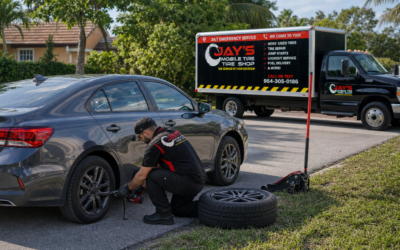
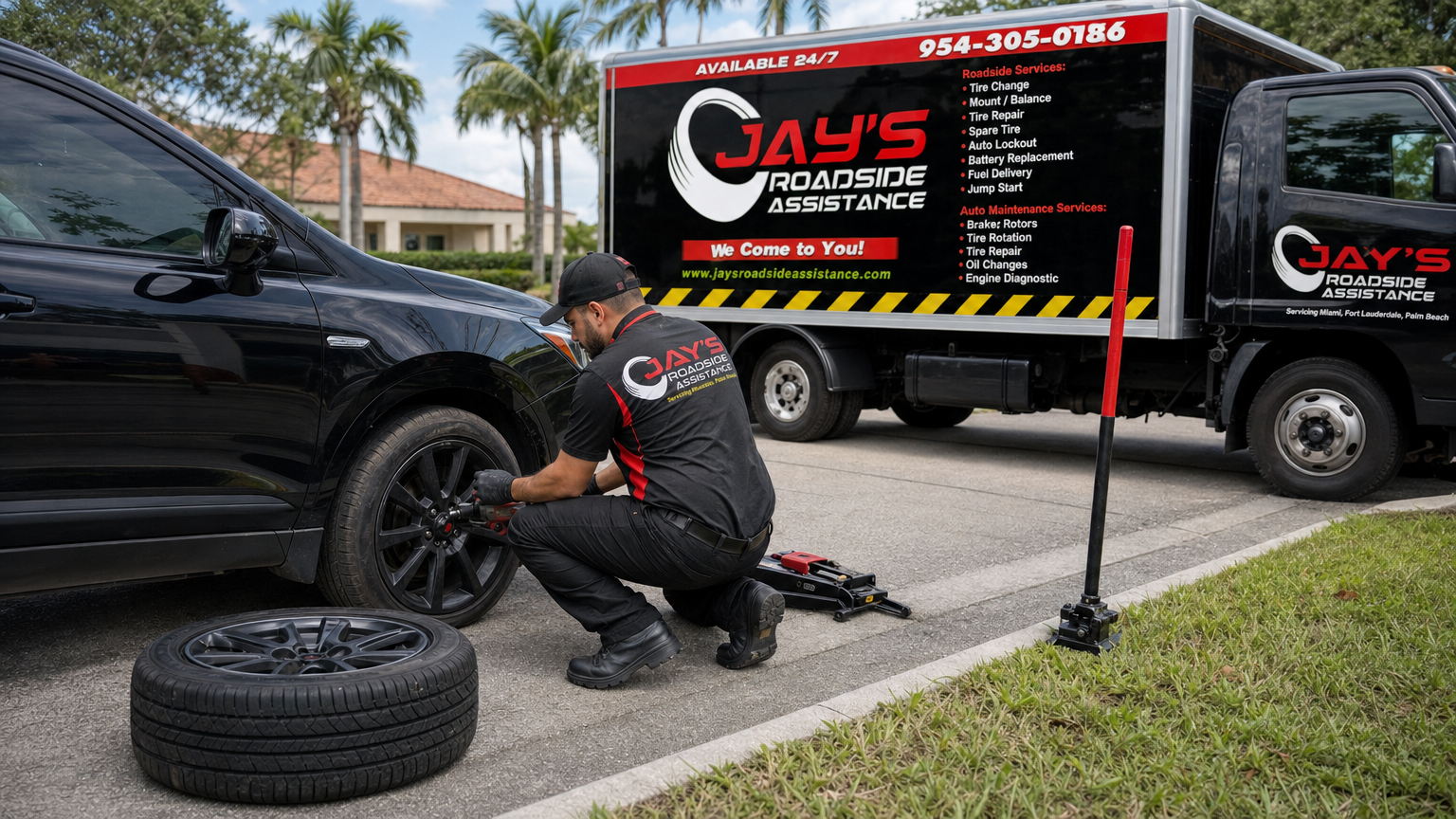
Yes. Bringing a replacement tire to wherever your vehicle is sitting — a driveway, a parking lot, the shoulder of the road — is the core of what a mobile tire service does. You call, describe the vehicle and what happened, and a technician drives out with the tools and, when the situation calls for it, a tire to install on the spot. That's different from a shop that expects you to get the car towed in first, which is why Jay's describes itself as a full-service mobile tire repair shop rather than just a repair van.
Whether that visit ends in a patch or a new tire depends on what's actually wrong with the one you have.
Repair or Replace: How That Gets Decided
A technician who can fix a tire on the spot will usually recommend that first — it costs less and gets you moving faster. A puncture through the tread, like a nail or screw, can often be patched or plugged if it's caught before the tire has run flat. Slow leaks fall into this category too, and they're easy to underestimate: a leak that seems minor one day can leave you stranded the next. If that's what you're dealing with in Broward County, the mobile tire repair for slow leaks page covers that specifically.
Damage that calls for a full replacement is usually more obvious: a cut or puncture in the sidewall, a tire that's been driven on flat long enough to damage the internal structure, or a blowout. None of those are safely repairable, no matter how good the patch kit is. A technician who tells you that isn't upselling you — they're keeping you off a tire that can fail again.
What to Have Ready Before the Technician Arrives
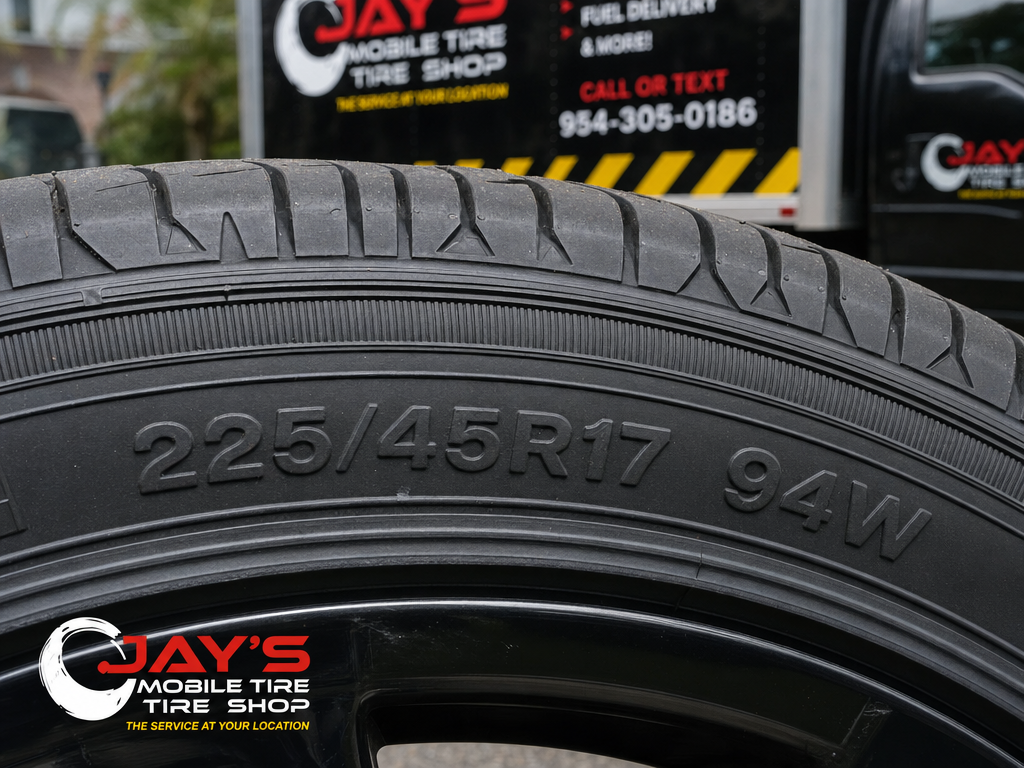
Two pieces of information speed up any call-out: your vehicle's year, make and model, and the tire size printed on the sidewall of the tire you need replaced — a string like 225/65R17. That number tells the technician the width, aspect ratio and wheel diameter, and usually the load and speed rating too, which determines whether a given tire will actually fit and perform safely on your car. If sidewall damage has destroyed that section of the tire, the same number is printed on the certification placard inside the driver's door.
A Typical Call-Out, Step by Step
A call-out follows a predictable order, even though every situation is different. You call and describe the vehicle and what happened — flat on the highway, a slow leak overnight, a blowout in a parking lot. Based on your description and the tire size you give over the phone, the technician gets a sense of whether this is likely a repair or a replacement before they even arrive.
Once on scene, the technician inspects the tire directly rather than relying on the phone description alone. A nail that looked straightforward over the phone can turn out to have torn the sidewall on the way down to flat, and a leak that sounded minor can turn out to be a bead problem that no patch will hold. The on-site inspection is what actually decides the job, not the initial phone diagnosis.
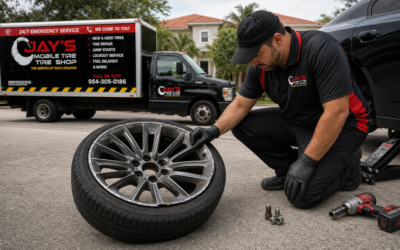
From there it's mechanical: jack the car, remove the damaged tire, install the replacement or complete the repair, reinflate to the correct pressure, and torque the lug nuts to spec. The car should be ready to drive on as soon as the technician confirms the fix.
What If the Exact Tire Isn't Immediately Available
Giving the tire size over the phone isn't just a formality — it affects how quickly the job can move. A size that's common on passenger cars is far easier to match quickly than a less common size, an unusual load rating, or a tire for a larger truck or specialty wheel. Confirming the exact size when you call lets the technician figure out ahead of time whether the right tire is ready to go, or whether it needs to be sourced before heading out — information worth asking about directly rather than assuming either way.
Matching the Right Tire to Your Vehicle
Not every replacement is a straight swap. Load rating and speed rating matter as much as the size itself — a tire rated to carry less weight than the one it replaces can wear faster or fail under load it wasn't built for. For drivers trying to work out which tire actually suits their vehicle and how they drive in South Florida, this guide to choosing tires in South Florida goes into that decision in more depth than a roadside call usually allows.
Why Tread Matching Can Matter on All-Wheel-Drive Vehicles
On most vehicles, a single new tire is a straightforward swap: match the size and rating, and the car drives the way it did before. All-wheel-drive vehicles complicate that slightly. A new tire has more tread depth than the three it's replacing, which means it has a very slightly larger rolling diameter. On an all-wheel-drive system, that difference in how each wheel spins can put extra strain on the drivetrain over time if the mismatch is significant enough.
This isn't a reason to avoid replacing a single tire on an all-wheel-drive vehicle — it's a reason to mention it when you call, if that's your situation. A technician can factor tread depth into the recommendation, and in some cases suggest replacing in pairs rather than one at a time. It's the kind of detail that's easy to miss if you're only thinking about the tire that's currently flat.
Availability Across Broward and South Florida
Tire failures don't wait for business hours, which is part of why mobile tire service exists at all. Jay's runs 24-hour service across Broward County and South Florida, and the mobile tire repair near me page has more detail on coverage and what a typical call-out involves. If you're not sure whether your location or your specific tire size is a straightforward job, that's exactly the kind of thing worth asking when you call rather than guessing.
Questions and answers
Can a tire with sidewall damage be repaired instead of replaced?
No. Any repair method — patch or plug — relies on the tire's internal structure staying intact. Sidewall damage compromises that structure in a way a repair can't safely fix, so replacement is the only sound option.
How do I find my tire size without a manual?
Check the sidewall of the tire itself, or the certification placard inside the driver's door — both show the same size string, including width, aspect ratio and wheel diameter.
Does the technician bring a tire with them, or do I need to have one already?
The technician brings the replacement based on the size and vehicle details you give at the time of the call. If your size is uncommon, confirm it during that call so there's no surprise about what's available before they arrive.
Is mobile tire replacement available outside normal business hours?
Jay's offers 24-hour mobile tire service, so a call-out isn't limited to daytime hours.
If you need a tire replaced where your car is parked, call Jay's Mobile Tire Shop with your vehicle details and tire size ready, or visit jaysmobiletireshop.com to see current coverage and get a technician on the way.